Why What We Grow Drive Down Costs
Most conversations about the economy focus on growth and profit, but rarely on values. Yet history shows that when profit becomes the only metric, costs spiral upward: inflation accelerates, essentials become harder to afford, and inequality deepens.
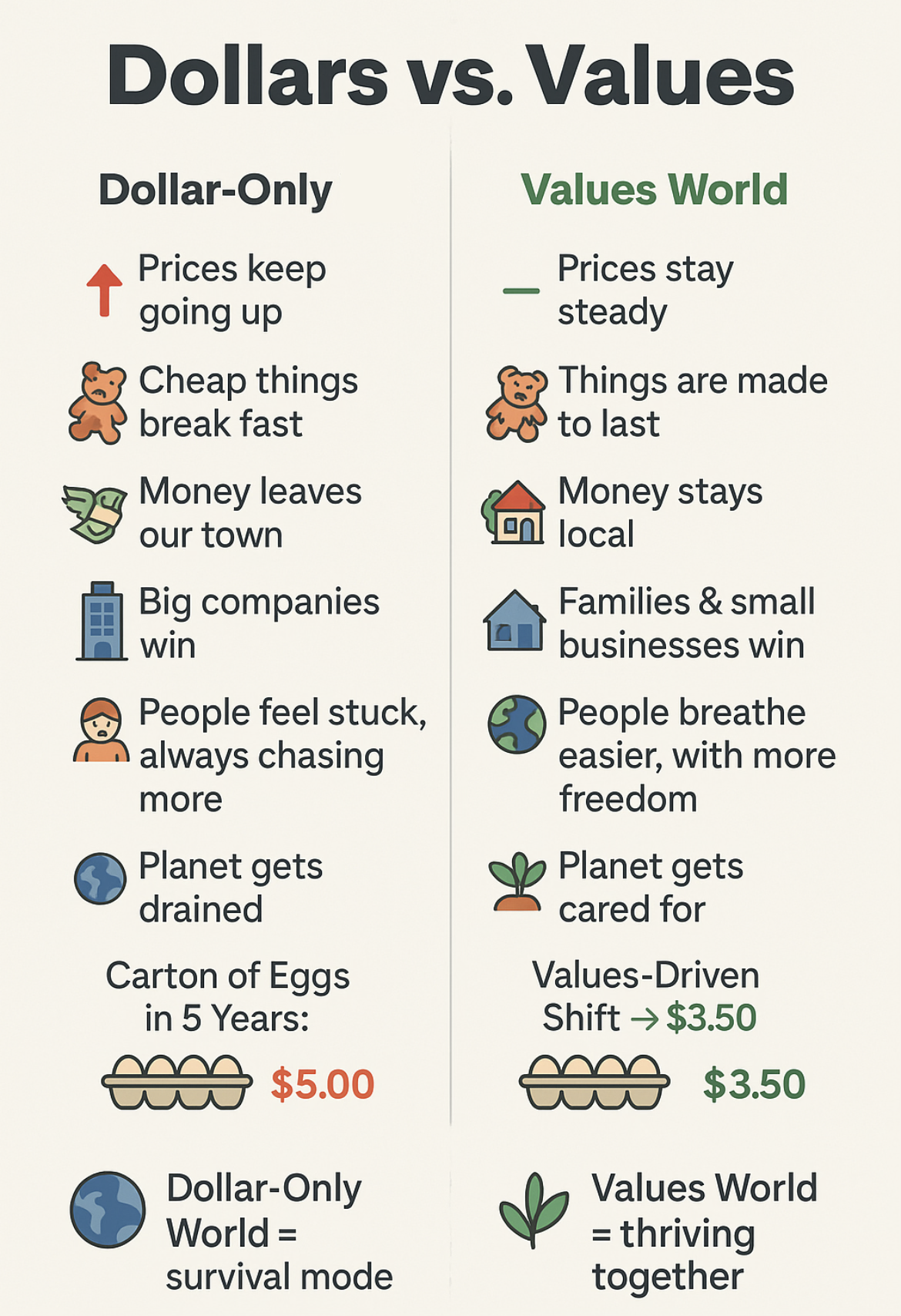
A values-driven economy flips this script. By prioritizing sustainability, fairness, and community, we create systems that are naturally cheaper for everyone over time:
-
•
Lower everyday costs. Goods made to last reduce replacement spending. Sustainable farming cuts hidden healthcare costs from poor diets and pollution.
-
•
Stable prices. When profit isn't the sole goal, businesses stop playing the inflation game. Price stability becomes a competitive advantage.
-
•
Efficient systems. Value-driven enterprises eliminate waste and overproduction, reducing costs across supply chains.
-
•
Shared prosperity. Money circulates locally, strengthening communities and keeping wealth in the hands of people who reinvest in people.
This isn't utopian, it's already happening. Norway's sovereign wealth fund, one of the world's largest investors, is now weighing social and environmental capital equally with financial returns. Leading economists like Mark Carney call this return to values a "rebalancing" that prevents market systems from collapsing under their own weight. Even Harvard Business Review has documented how "Creating Shared Value" helps companies grow while reducing systemic costs.
The After Effect: Prices Go Down
When we shift our focus, the everyday cost of living, eggs, groceries, energy, housing, stabilizes or even decreases. Not because money disappears, but because waste, greed, and harm are stripped out of the price. What remains is true value at a lower cost.
Rootsy's mission is simple: make it easy to participate in this shift. Every purchase on our platform is a step toward an economy where values matter more than dollars, and where thriving replaces surviving.